THE MECHANICS OF TRANSITION
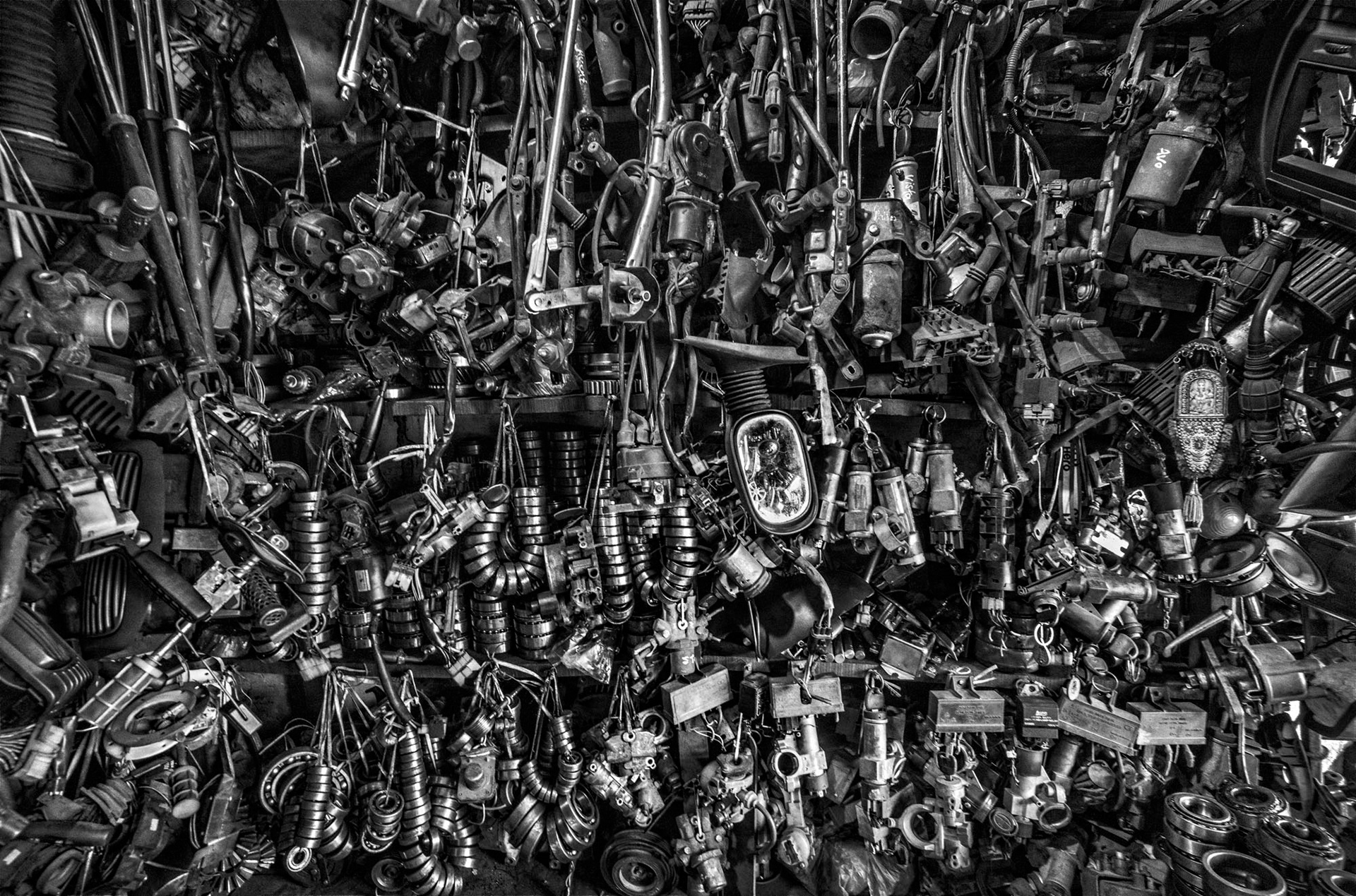
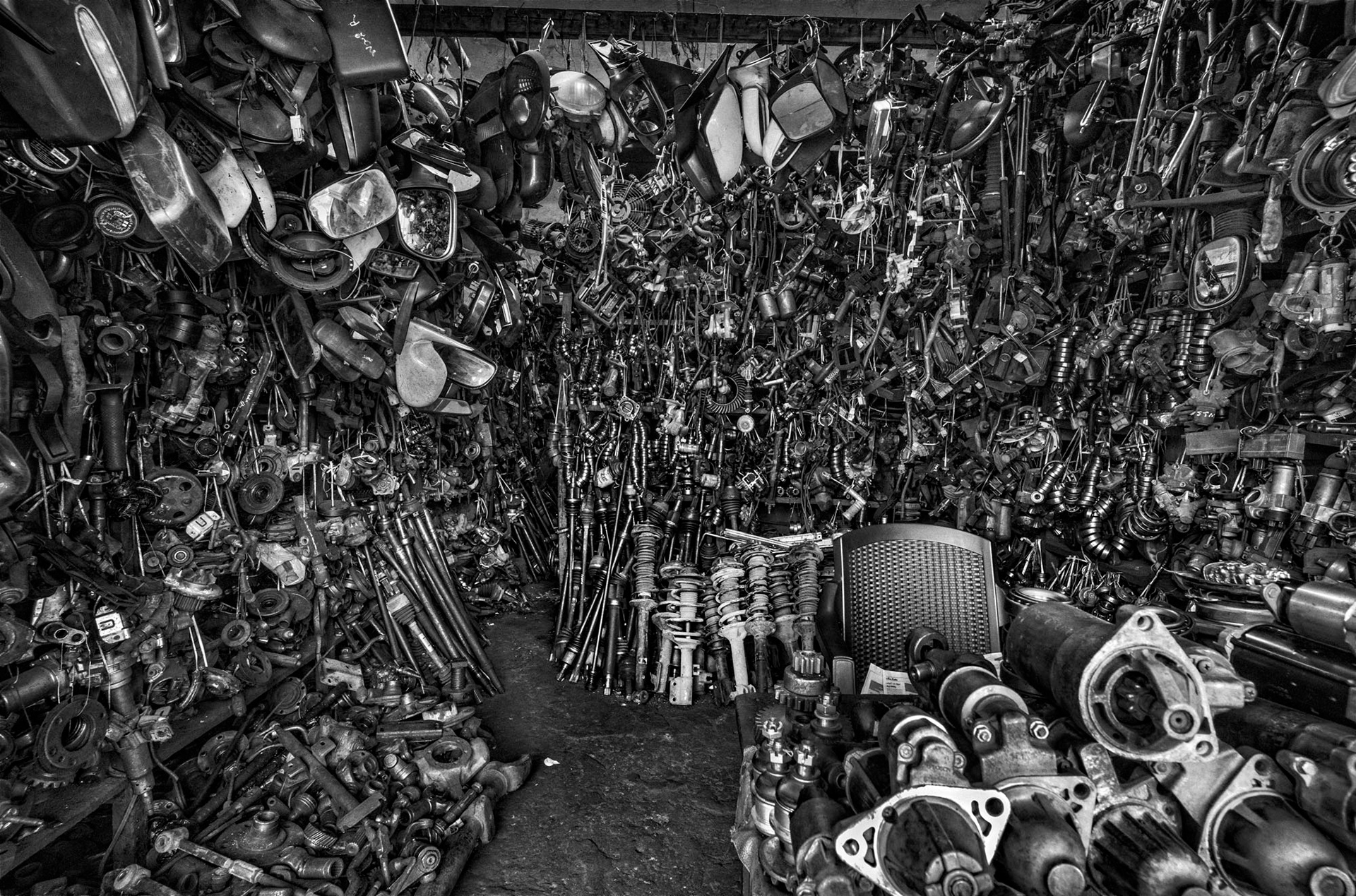
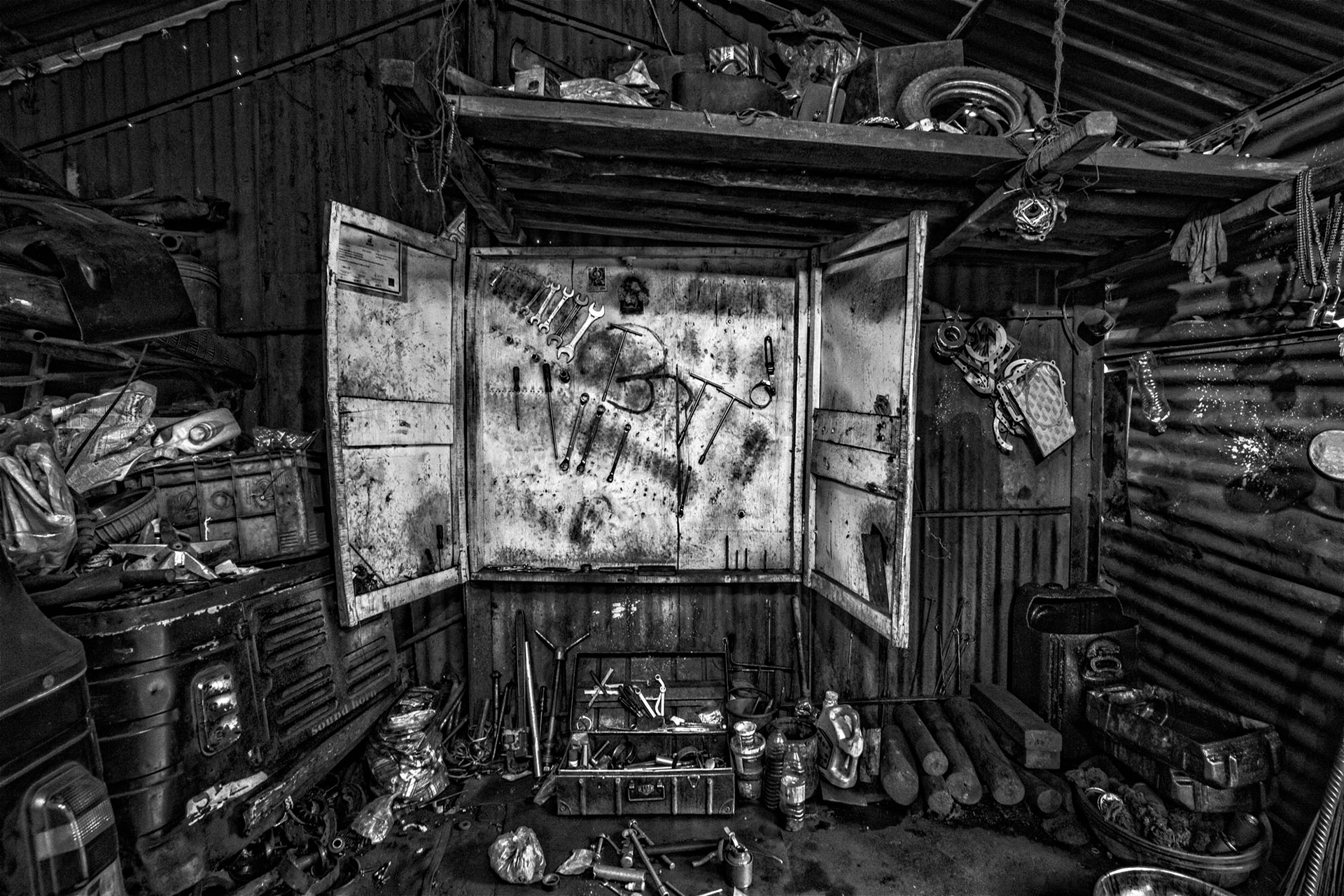
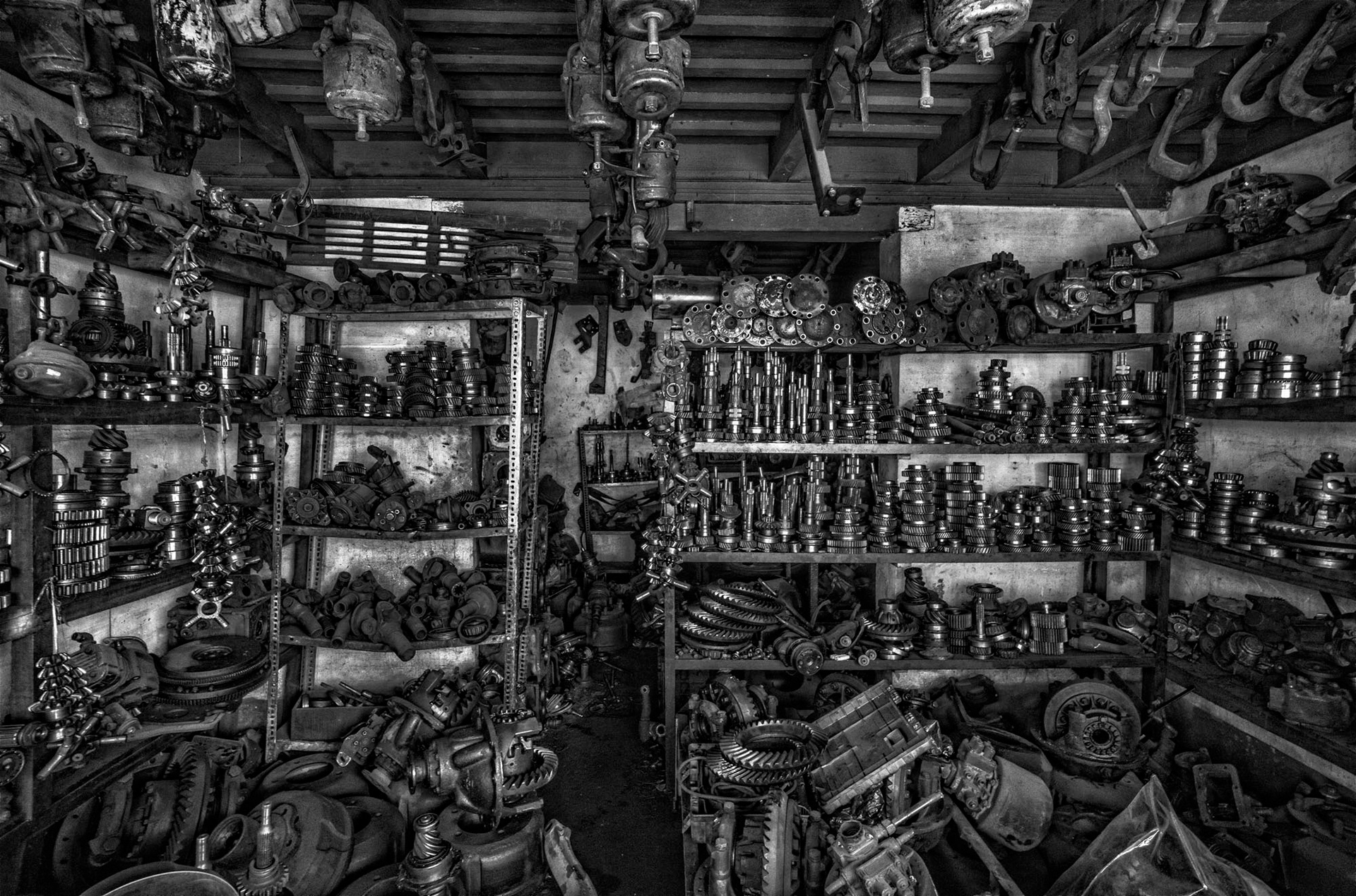
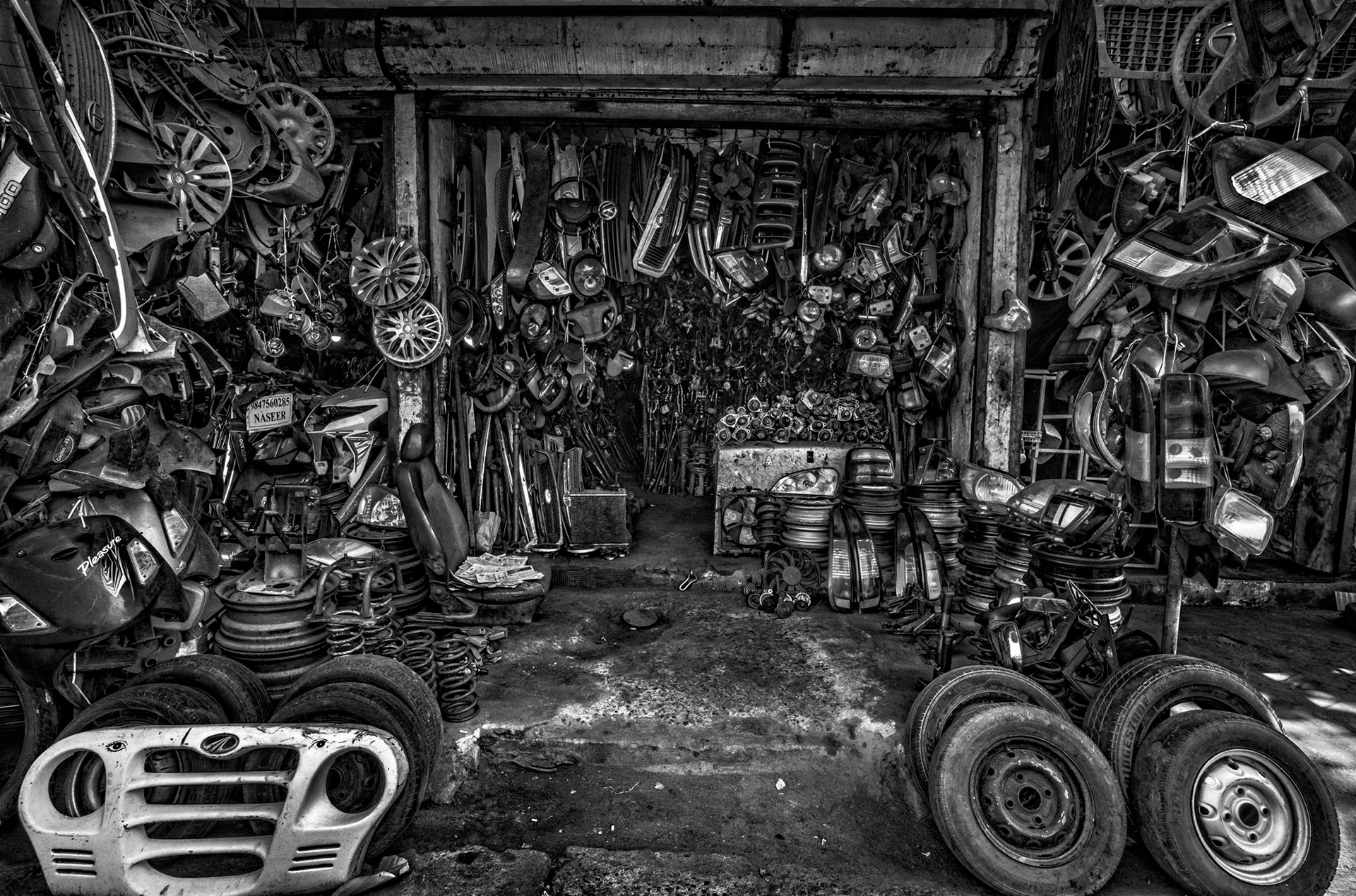
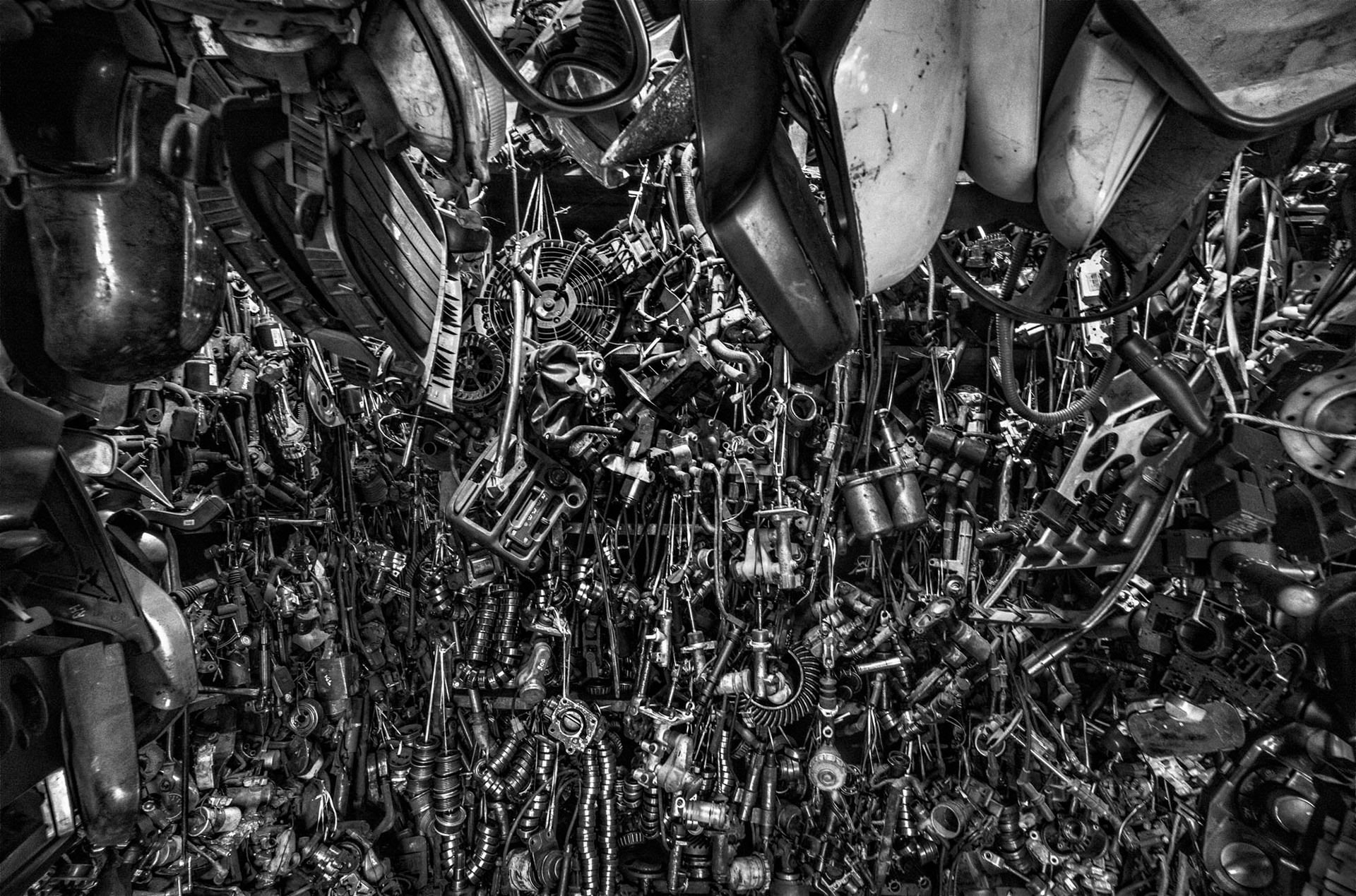
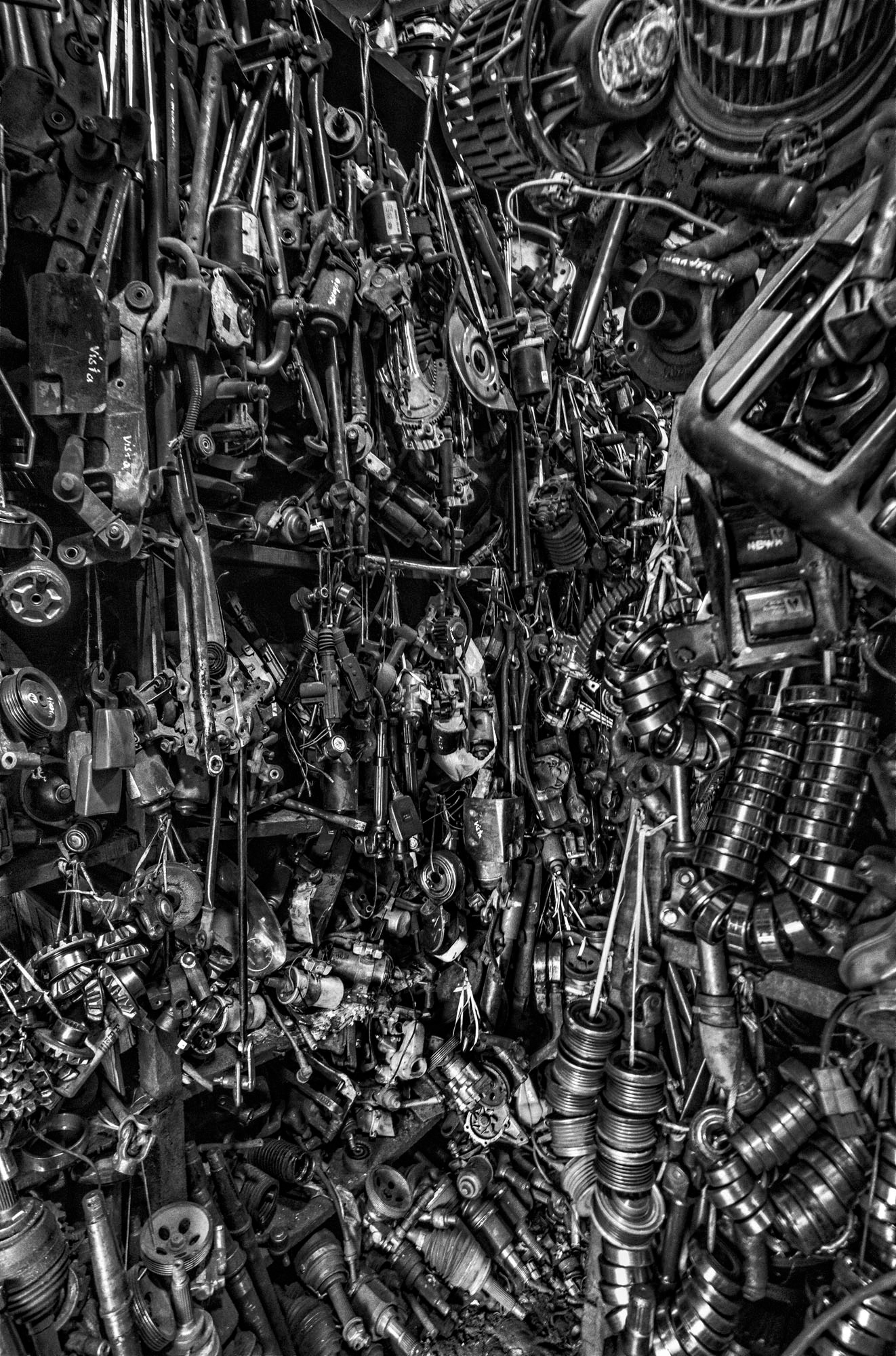
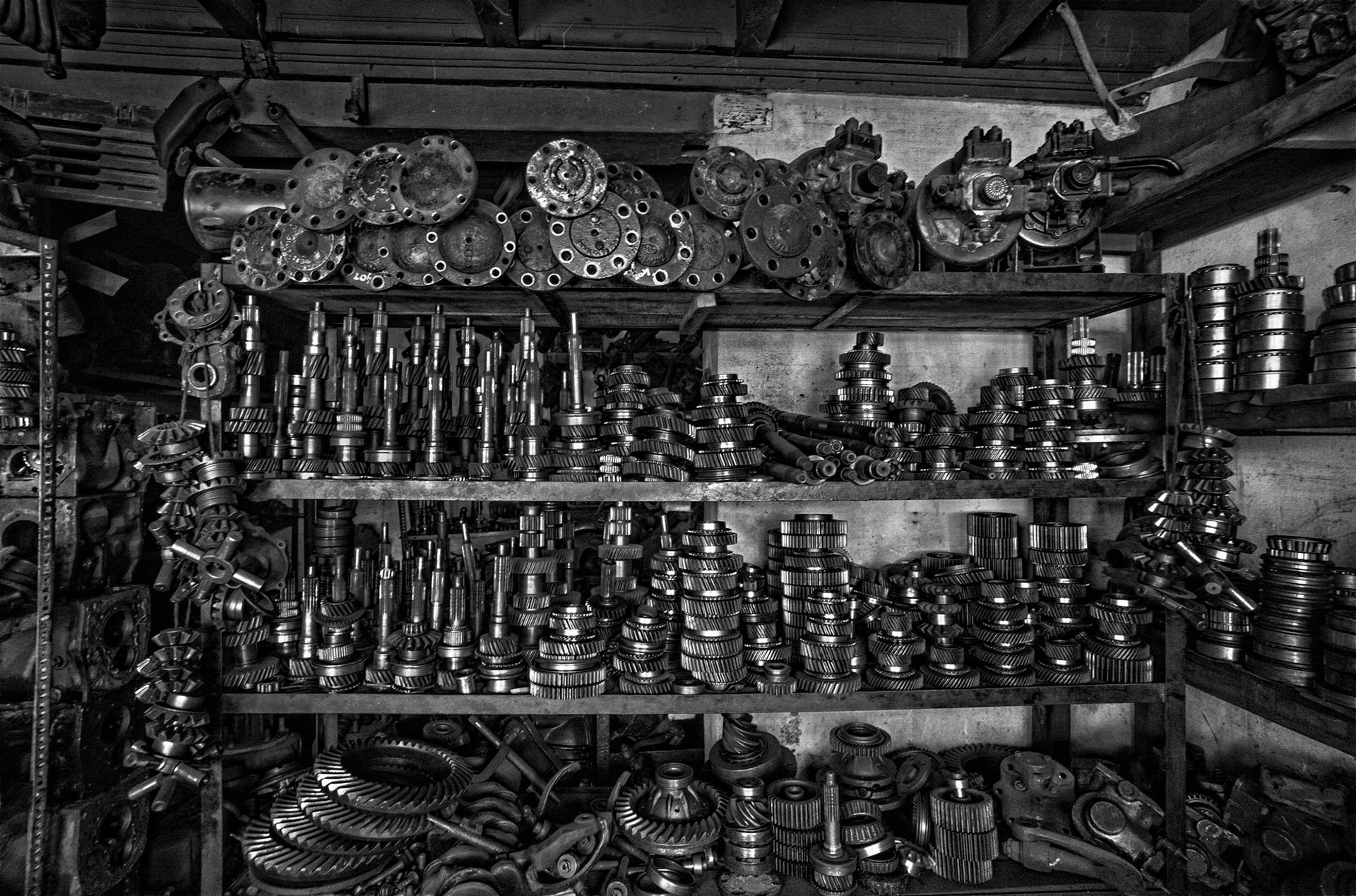
This series explores and documents unintended sculptural installations, emerging from the abstract, suggestive forms of dismantled vehicle parts found in mechanical workshops across India.
Through images that are striking in their formal intensity, Ewing turns his attention to the informal repair economies that strive to sustain combustion engines as they approach obsolescence.
Beneath the surface of the global automotive industry lies a dense network of improvised workshops, micro-markets, and labor systems in which value is not created through the production of new goods, but through the continuous reuse of those already in circulation. In these spaces, discarded parts function as currency, technical knowledge is passed on orally through apprenticeship, and engines remain in use long after their original manufacturers deemed them useful.
Rendered in stark, direct black-and-white, Ewing reveals the underlying logic of these environments: systems of inventory, forms of micro-entrepreneurship, and survival strategies that sustain millions of workers worldwide. What appears as disorder is, in fact, the economic life that persists beyond industrialization.
Out of the mechanical, a distinctly human universe emerges—one shaped by care, attention, continuity, and repair—operating as a transmission system for enduring values that resist disappearance.